Buying Guide:How to Choose the Right Weighing Scale for Your Market
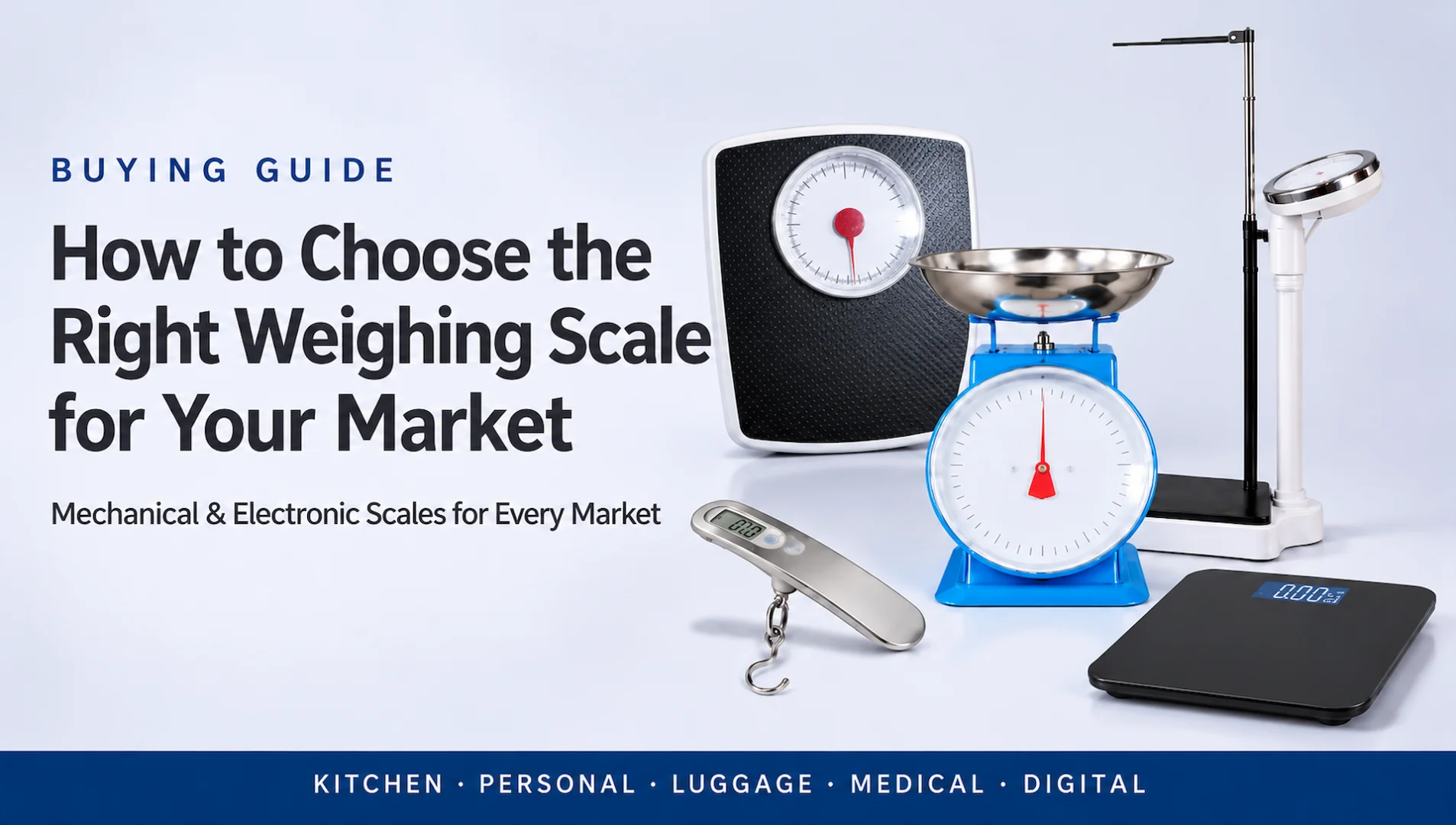
Buying Guide:How to Choose the Right Weighing Scale for Your Market
Choosing the right weighing scale is not only about selecting a product with an attractive appearance. For importers, wholesalers and retailers, the right scale should match the target users, application, price range, packaging requirements and local market preferences.
Mechanical and electronic scales are two of the most common options. Each type has its own advantages and is suitable for different sales channels.
Mechanical Scales for Simple and Reliable Weighing
Mechanical scales do not require batteries or external power. They are easy to operate and suitable for users who prefer a simple weighing solution.
Mechanical personal scales are commonly used in homes, traditional retail stores and general household markets. Their dial display allows users to read the weight directly, while the platform design provides a practical solution for daily weighing.
Mechanical hanging scales and kitchen scales are also suitable for markets, farms, shops and general goods weighing. Depending on the model, buyers may select different platform, hook, tray and dial designs.
Electronic Scales for Clear Digital Readings
Electronic scales provide a digital display and are often selected for applications that require clear numerical readings. Kitchen scales, luggage scales, jewelry scales and personal scales may all be available in electronic formats.
When selecting an electronic scale, buyers should consider:
Weighing capacity
Graduation
Display size
Battery type
Product dimensions
Unit conversion options
Auto-off function
Retail packaging
The required features may vary according to the target market and product positioning.
Important Factors for Importers
Before placing an order, importers should confirm the following information:
Product category and application
Capacity and graduation
Mechanical or electronic structure
Measurement units
Product material
Platform or bowl design
Packaging requirements
Logo and private label options
Sample availability
Target order quantity
For example, a retailer selling travel accessories may prefer compact luggage scales, while a supermarket buyer may need kitchen scales with retail-ready packaging. A traditional market distributor may prefer mechanical hanging scales with large, easy-to-read dials.
Work with a Flexible Scale Supplier
A professional weighing scale supplier should be able to provide different product categories for different market needs. This allows buyers to source personal scales, kitchen scales, luggage scales, jewelry scales and hanging scales from one supplier.
If you are looking for weighing scales for your market, send us your target application, product category, required capacity and packaging requirements. We can recommend suitable models and discuss OEM or private label options.